
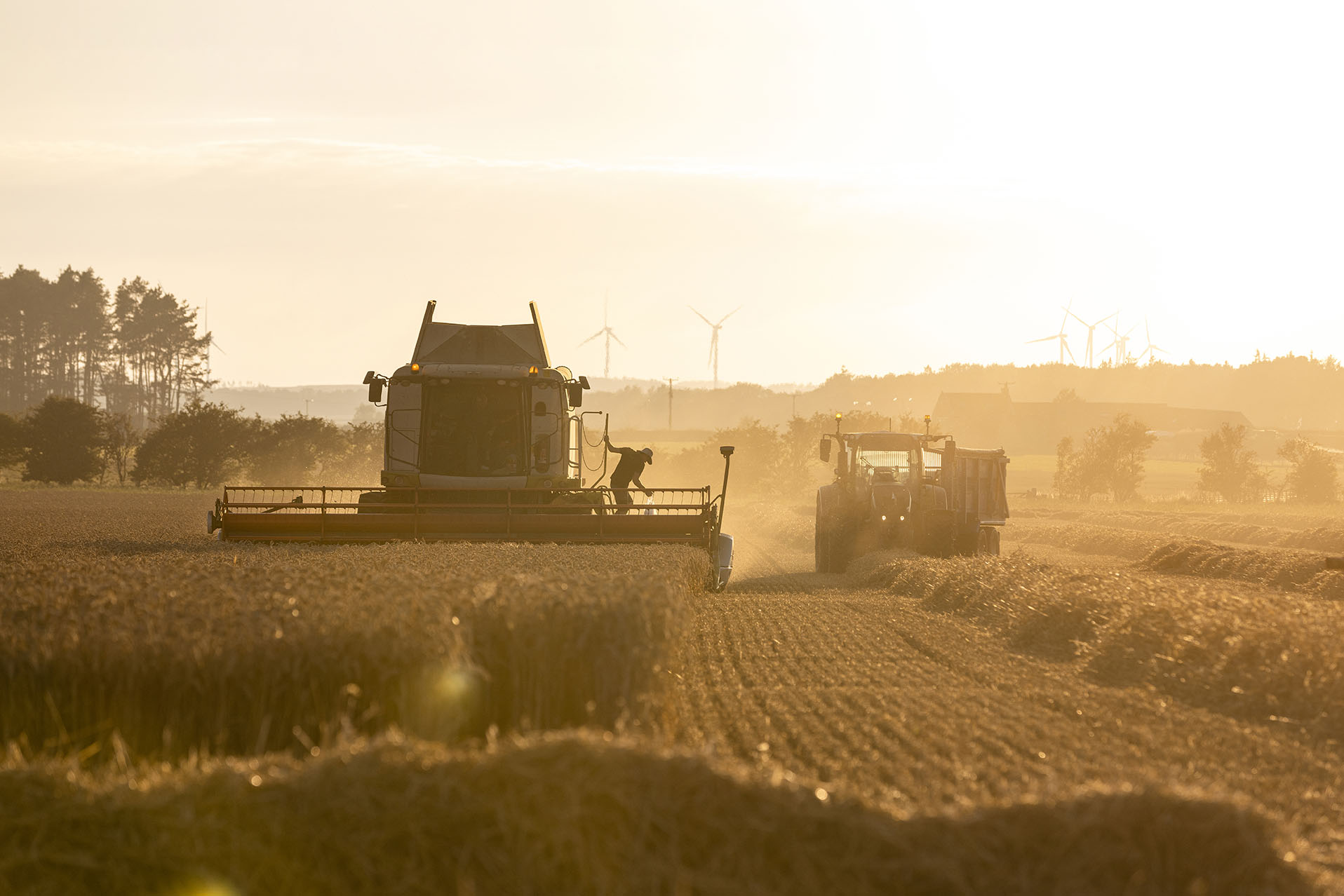

By Tim Ellis, Bentley Hall Farm, Staffordshire
Brix measures the concentration of dissolved solids, primarily sugars, in plant sap using a refractometer; one degree Brix corresponds to one gram of sugar per 100 grams of sap. In horticulture, Brix is employed to assess quality and flavour, while in broadacre agriculture, it can be used as an indicator of nutrient density and plant health.
Higher Brix values are generally associated with healthier, more resilient plants, with readings of 12 or above typically signify good health. Brix values reflect photosynthetic efficiency and can indicate reduced susceptibility to pests and diseases, in turn helping the farmer reduce expensive inputs. A Brix reading of 3 or below is thought to be an open invitation to both insects and pathogens to attack the plant.
Several key factors influence Brix, including temperature, light, soil moisture, and fertility. A well-balanced plant with adequate levels of critical nutrients—calcium, magnesium, phosphorus, potassium, and boron—contribute to increased Brix levels, while silicon, amino acids, and humic or fulvic acids can all help increase your plant health and in turn your Brix reading.
Conversely, excessive nitrate nitrogen in the plant can lead to rapid forced watery growth, leading to dilute sugar concentrations, resulting in lower Brix values. NO3 usually takes a lot of the plants photosynthetic energy to convert nitrates into a more usable form of nitrogen.
With this in mind, you would expect an application of NO3 / nitrate rich Plasma Activated Water to your crops would lower the Brix reading, making the plant more susceptible to attacks from pests and disease. However, trials in the US have shown an unexpected increase in Brix levels (above 15) following an application of Plasma Activated Water – indicating a healthier plant, with higher resistance to insects and disease. This indicates that there is more going on with PAW than simply giving the plant nitrates (read more about this on our resources page).
We will be carrying out trials in the UK this summer to try and replicate these findings – helping us to reduce our farm input costs and our over reliance on chemical interventions.
A comprehensive understanding of these factors is essential for accurate and meaningful Brix measurement.
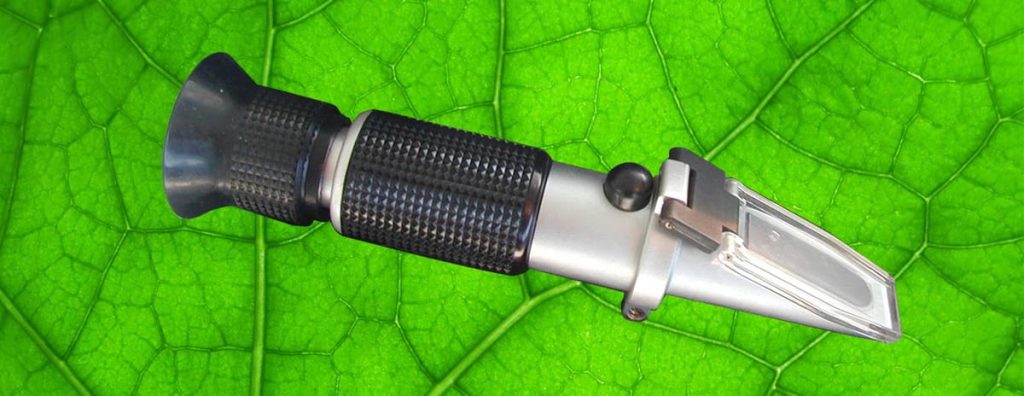
A Refractometer used to read a plants Brix levels
